
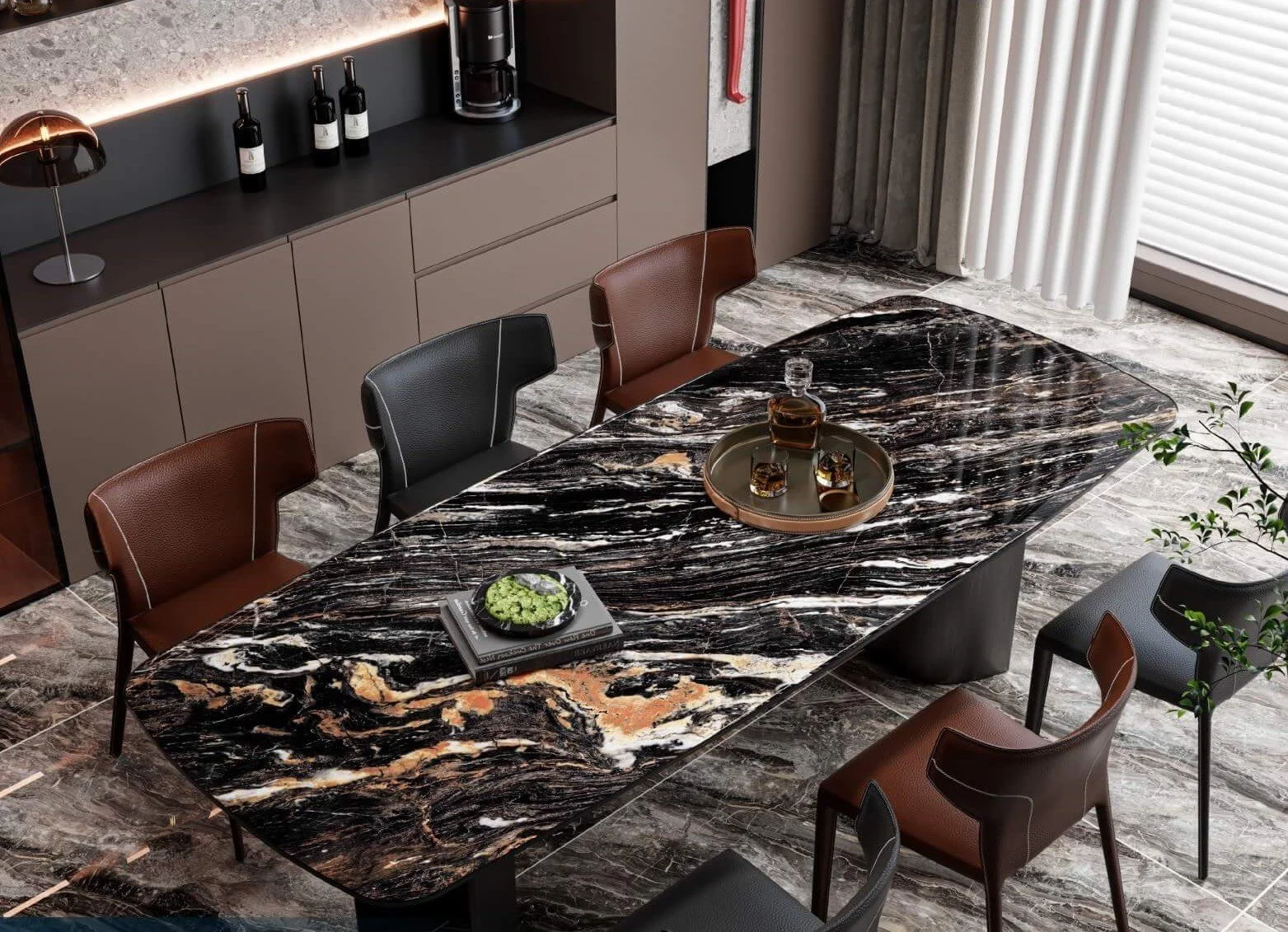
Sintered Stone
All you need to know
Key information to consider when selecting and specifying this surface — covering performance, application, and the essential details that inform both design and function.
IMPORTANT INFORMATIONAdvantages
UV resistance and colour stability. It does not fade or yellow under long-term sunlight exposure, suitable for both indoor and outdoor applications.
Stain resistance and easy cleaning. With an extremely dense, non-porous surface, it resists liquid penetration. Most stains can be wiped away easily with water or mild detergent.
Waterproof and corrosion-resistant. Impervious to water, oil, and common chemical cleaners, maintaining stability in humid or corrosive environments.
Food or most household stains can be wiped with a non-abrasive sponge, scrubber or damp cloth dipped in a little cleaner or soapy water and then rinsed with clean water.
Extreme hardness and scratch resistance. Sintered stone is highly wear-resistant and not easily scratched by everyday utensils, knives or metal objects, making it ideal for high-traffic surfaces.
Food-safe and hygienic. Non-toxic and BPA-free, it is suitable for direct food contact, making it ideal for kitchen benchtops and dining surfaces.
Heat and high-temperature resistance. It can withstand high temperatures without deformation, discolouration or burning and can come into direct contact with hot cookware.
Precautions
Avoid heavy impact or strong pounding. Although hard, it is brittle and may crack or chip under sudden heavy impact.
Use proper adhesives and base support. A solid, flat base and special adhesive are necessary to prevent hollowing, shifting, or cracking after installation.
Prevent sudden temperature changes. Avoid placing extremely cold objects directly on a very hot surface to reduce thermal shock risk.
Professional cutting & installation required. Sintered stone is dense and difficult to process; improper cutting or handling can lead to breakage. Professional tools and installers are recommended.
Handle with care during transportation. It should be placed vertically and supported evenly to avoid bending stress or edge collisions.
Do not use strong corrosive cleaners. Although chemically resistant, long-term use of strong acids or alkalis may damage the surface finish.
Sealing is usually not needed. Unlike natural stone, sintered stone does not require periodic sealing, and improper sealing may affect its appearance.