
Engineered Quartz Stone
All you need to know
Key information to consider when selecting and specifying this surface—covering performance, application, and the essential details that inform both design and function.
IMPORTANT INFORMATIONMaintenance Methods & Precautions
Printed quartz stone is not suitable for outdoor use.
Avoid prolonged exposure to direct sunlight. If a kitchen benchtop is positioned near a window with direct sunlight or strong reflected light, applying UV-protective film to the glass can help extend the life of the surface.
If the benchtop comes into contact with non-neutral cleaning agents or chemical solvents, rinse it immediately with clean water.
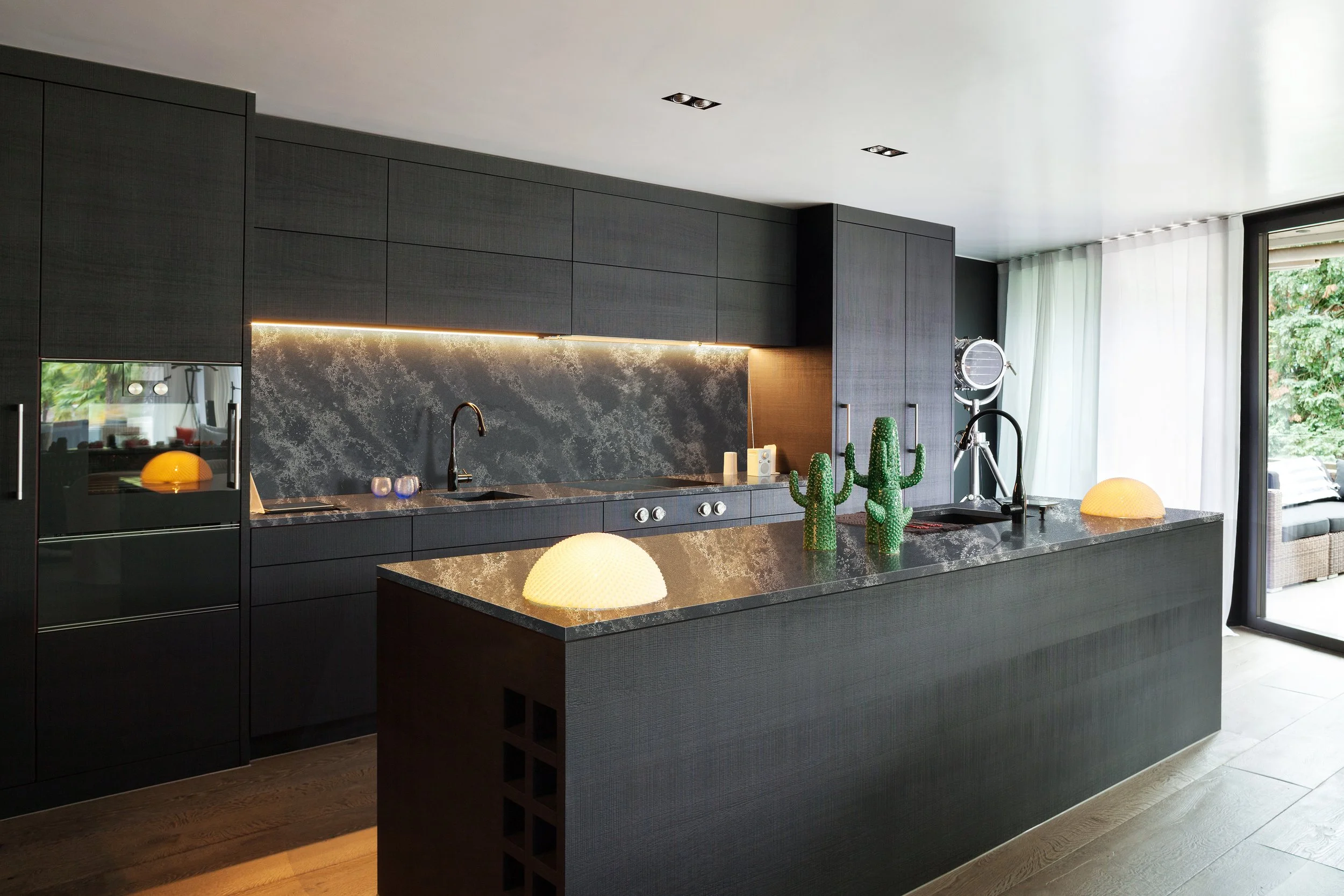
Do not place hot pots or pans directly on the benchtop. Always use a trivet or heat pad to reduce the risk of heat damage.
Printed quartz stone slabs and processed offcuts should not be stored outdoors. If temporary outdoor storage is unavoidable, protect them with UV-resistant outdoor covering.
Clean spills promptly, particularly potential staining agents such as turmeric, vinegar and wine. Quartz is stain-resistant, but prolonged exposure to certain substances may cause discolouration.
For daily cleaning, use warm soapy water, then wipe the surface with a clean damp cloth.
Use trays, cutting boards, trivets and coasters to help protect the surface.
Do not use abrasive or harsh chemical cleaners, as they may damage the resin and quartz surface. Choose a non-abrasive, pH-balanced cleaner.
Most household stains can be removed using a non-abrasive sponge, soft scrubber or damp cloth with a small amount of mild cleaner or soapy water. Rinse with clean water.
Although quartz is scratch-resistant, it is not scratch-proof. Avoid using sharp objects directly on the surface and always use a cutting board.
Quartz is durable but not indestructible. Avoid dropping heavy objects on the surface or edges, as this may cause chips or cracks.